


Foot or ankle pain that won't go away is often a sign it's time to see a specialist. Knowing what to expect at your first appointment can help you feel more prepared and confident about the next steps.
A foot and ankle specialist consultation involves reviewing your symptoms and medical history, performing a physical examination and recommending imaging if needed to reach an accurate diagnosis. Based on the findings, your specialist will discuss a personalised treatment plan suited to your condition and lifestyle.
This guide walks you through each stage of your first foot and ankle specialist consultation, including the medical history review, physical examination, imaging tests (if needed), diagnosis and treatment options your specialist may recommend.
Key Takeaways
- A foot and ankle specialist consultation aims to identify the underlying cause of your symptoms, not just treat the pain.
- Most patients receive a diagnosis and treatment recommendations during their first consultation, while imaging is only recommended when clinically required.
- Foot and ankle specialists diagnose a wide range of conditions, including plantar fasciitis, ankle sprains, bunions, arthritis and Achilles tendon disorders.
- Treatment is tailored to your diagnosis, lifestyle, recovery goals and may include physiotherapy, orthotics, medications or surgery where appropriate.
Who Can Benefit from a Foot and Ankle Specialist Consultation?
You may benefit from a foot and ankle specialist consultation if you experience:
- Persistent foot or ankle pain that does not improve with rest or conservative treatment.
- Sports injuries, such as ankle sprains or Achilles tendon injuries.
- Recurring ankle instability or repeated sprains.
- Heel pain caused by conditions such as plantar fasciitis.
- Bunions, arthritis or other conditions affecting foot and ankle function.
A specialist consultation can help establish an accurate diagnosis and recommend the most appropriate treatment for your condition.
How Should You Prepare for Your Foot and Ankle Specialist Appointment?
Preparing for your appointment can help your specialist better understand your condition and make your consultation as productive as possible. Before your visit:
- Bring any relevant medical records or imaging if available, including referral letters, X-rays, MRI scans, ultrasound reports or details of previous treatments.
- Make note of your symptoms, including when they started, where the pain or discomfort is located, what triggers or relieves them and how they affect your daily activities.
- Prepare a list of your medications and any existing medical conditions that may be relevant to your foot or ankle health.
- Wear comfortable clothing and your usual footwear so your specialist can examine your foot and ankle and assess your walking pattern and footwear, if needed.
What Happens During Your Foot and Ankle Specialist Consultation?
Your consultation is designed to understand your symptoms, assess your foot and ankle, and identify the underlying cause of your condition. While every appointment is tailored to the individual, you can generally expect the following:
Reviewing Your Symptoms and Medical History
Your specialist will discuss:
- When your symptoms started and how they've changed over time.
- The location, severity and frequency of your pain or discomfort.
- Factors that improve or worsen your symptoms.
- Previous injuries, treatments, surgeries, medications and relevant medical conditions.
Performing a Physical Examination
A physical examination helps your specialist assess the function of your foot and ankle and narrow down the possible causes of your symptoms. Depending on your condition, the examination may include:
- Inspecting your foot and ankle for swelling, bruising, redness, deformities, skin changes or differences between both feet.
- Palpating the affected area to identify tenderness, inflammation or the exact location of pain.
- Assessing joint movement and flexibility by evaluating your range of motion and identifying any stiffness or movement restrictions.
- Testing muscle strength and tendon function to determine whether weakness or tendon injuries are contributing to your symptoms.
- Evaluating ligament stability using specific clinical tests to assess for ankle injuries or ligament damage.
- Observing your gait and biomechanics by watching how you stand, walk or perform certain movements to identify issues with balance, alignment or weight distribution that may be contributing to your condition.
Ordering Diagnostic Imaging, If Required
If additional information is needed to confirm a diagnosis, your specialist may recommend:
- X-rays to assess bone alignment, fractures or arthritis.
- Ultrasound to evaluate tendons, ligaments or soft tissue injuries.
- MRI scans for a detailed assessment of cartilage, tendons, ligaments or stress injuries.
Not every patient will require imaging, and any investigations will be based on your symptoms and clinical findings.
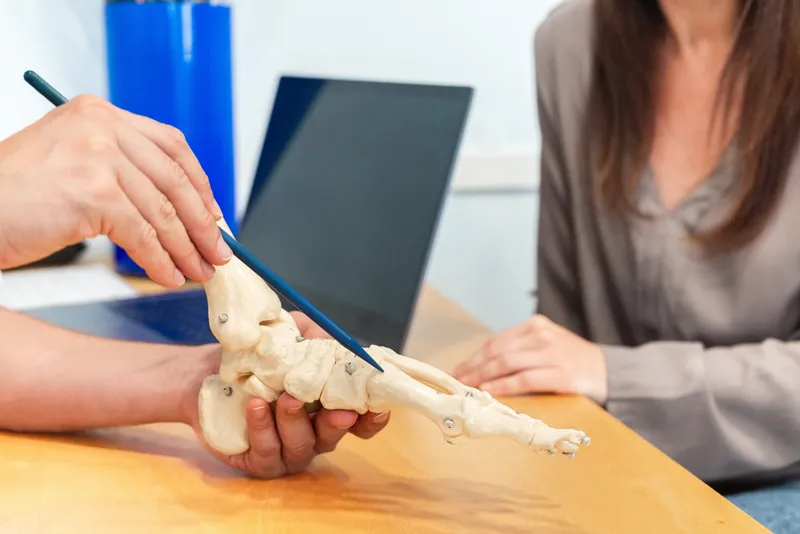
What Happens After Your Foot and Ankle Specialist Appointment?
Once your specialist has completed your assessment, they'll explain the findings, discuss your diagnosis, recommend appropriate treatment options and outline the next steps in your care. The exact recommendations will depend on your condition, symptoms, lifestyle and recovery goals.
Understanding Your Diagnosis
Your specialist will explain what is causing your symptoms and how the assessment findings support the diagnosis. They'll review the results of your medical history, physical examination and any imaging performed, then discuss what the diagnosis means for your recovery and daily activities.
If additional information is still needed, further investigations may be recommended before finalising your treatment plan. You'll also have the opportunity to ask questions about your condition, expected recovery and any activity restrictions.
Discussing Your Treatment Options
Depending on your diagnosis and condition, this may include:
- Lifestyle and activity modifications to reduce stress on the affected area.
- Physiotherapy and rehabilitation to improve strength, flexibility and function.
- Custom orthotics or supportive footwear to improve alignment and relieve pressure.
- Medications or injection therapies, where clinically appropriate, to help manage pain and inflammation.
- Foot and ankle surgery, if conservative treatments are unlikely to provide sufficient relief or are not appropriate for your condition.
Treatment recommendations are tailored to your diagnosis, lifestyle, activity level and recovery goals.
Diagnosing Foot and Ankle Conditions with Dr Yung Shing Wai
Understanding what happens during a foot and ankle specialist consultation can help you feel more confident about seeking care and making informed decisions about your treatment.
SW Yung Orthopaedic, Foot and Shoulder Surgery provides comprehensive assessment and treatment for a wide range of foot and ankle conditions. Dr Yung Shing Wai, a Consultant Orthopaedic Surgeon with over 30 years of experience and Singapore's first fellowship-trained foot and ankle surgeon, offers personalised care based on your diagnosis and treatment goals.
If you're experiencing ongoing foot or ankle symptoms, contact SW Yung Orthopaedic to book an appointment with Dr Yung Shing Wai.
FAQs About Foot & Ankle Specialist Consultations
How long does a foot and ankle specialist consultation take?
A first consultation typically takes longer than a follow-up appointment, as your specialist will review your medical history, discuss your symptoms, perform a physical examination and determine whether additional investigations are needed. The exact duration depends on the complexity of your condition and the assessments required.
Can treatment begin at my first consultation?
In many cases, treatment can begin after your initial consultation. Depending on your diagnosis, your specialist may recommend activity modification, physiotherapy, orthotics, medications or other conservative treatments. If further investigations are needed, these will be arranged before your treatment plan is finalised.
Do I need a referral to see a foot and ankle specialist?
Referral requirements vary depending on your healthcare provider and insurance coverage. While some patients attend with a referral from a general practitioner or another healthcare professional, others may be able to book directly. If you're unsure, contact the clinic before your appointment to confirm the requirements.
Meet Our Orthopaedic Specialist in Singapore
Dr Yung Shing Wai
Consultant Orthopaedic Surgeon
Orthopaedic, Foot and Shoulder Surgery
MBBS, National University of Singapore (1985)
FRCSEd (General Surgery), Royal College of Surgeons of Edinburgh, United Kingdom (1990)
FAMS (Orthopaedic Surgery), Academy of Medicine, Singapore (1997)
Dr Yung Shing Wai is an orthopaedic specialist in Singapore with over 30 years of clinical experience and a particular focus on foot, ankle and shoulder conditions. He is recognised as Singapore's first fellowship-trained foot and ankle surgeon and was also among the first fellowship-trained orthopaedic surgeons in the country specialising in shoulder surgery.
After graduating from the National University of Singapore in 1985, Dr Yung obtained his Fellowship with the Royal College of Surgeons of Edinburgh before pursuing sub-specialty fellowship training in Foot and Ankle Surgery and Shoulder Surgery at the University of Washington in Seattle. His extensive training has supported decades of experience in managing a wide range of musculoskeletal conditions and complex orthopaedic concerns.


